A home is possibly the largest purchase you'll ever make, and it’s normal to overthink even the smallest details in the process – especially if it’s your first time to invest in real estate. A lot of cash is at stake, and you want to make sure that you’re getting the best deal for every penny.
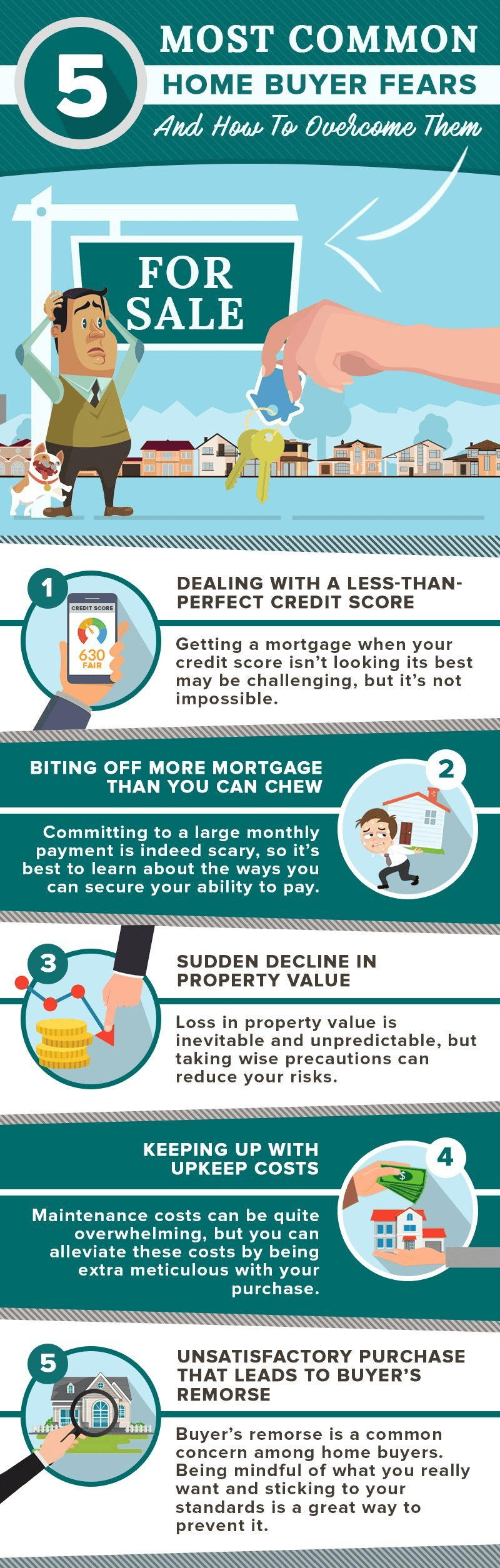
While buying real estate entails a lot of careful planning and extensive research, you won’t be going through it alone. Your agent will be there to help you every step of the way. Even so, we understand that peace of mind can still seem elusive and that your fears can bubble up to the surface even when you least expect it. To help you with this, we have listed down the top 5 fears homebuyers have, and a guide on how to overcome them:
1. Dealing With a Less-than-perfect Credit Score
The thought of securing a loan when you have a less-than-perfect credit score can be quite stressful, and the fear of not getting approved may hold you back from working on a significant purchase such as buying a home.
If you're convinced that you’re ready to buy a home, first get a copy of your credit report and make sure that there are no errors. According to a report done by the Federal Trade Commission, 1 in 5 Americans is being overcharged for his/her financial obligations due to a mistake in his/her credit report. If you’re familiar with loans, you know that the lower your credit score, the higher your interest rates will be. The accuracy of your credit report is crucial in ensuring that you won’t be unrightfully burdened with higher interest rates.
Still, if your credit is less than perfect, you have no reason to feel embarrassed and helpless. Many homebuyers are dealing with the same thing. The most practical thing you could do is to gradually pay off your delinquent accounts, improve your debt-to-income ratio, and try not to incur any new debt. Be proactive about your credit and start improving it until you’re confident enough to apply for a loan.
2. Biting Off More Mortgage Than You Can Chew
A sizeable monthly payment can be overwhelming to think about, but you can combat your fears by having a firm understanding of your financial situation. To achieve this, you will have to prepare a budget that factors in all your current and ongoing bills. List down all your monthly payables, including credit cards, student loans, car amortizations, etc.
When you have an accurate account of your monthly cash flow, you’ll find it easier to determine how much you can afford to comfortably spend on a house. And, if you’re serious about purchasing a home in the very near future, the financial boundaries you’ve set for yourself will help you create sound decisions.
3. Sudden or Gradual Decline in Property Value
A decline in property value may occur for any home, regardless of size and location, and even without any form of disaster. While it is impossible to completely predict what will happen to home prices, you can still do your part in taking wise precautions to reduce your risks.
Nearby homes, surrounding facilities, and neighborhood features play a huge role in determining a home’s property value. If you want to ensure that your home wouldn’t suffer from a steadily decreasing value, learn
how to spot unhealthy neighborhoods and avoid purchasing a home from those kinds of areas. Choose a well-kept neighborhood with a thriving community – a low crime area in which people feel safe walking down the street at night, especially children and women. Make sure that the area is mainly owner-occupied and with quality schools and hospitals nearby. You can even inquire with the local government about future development plans in the area.
4. Keeping Up With Upkeep Costs
Even homes that are in the best shape will require some amount of upkeep, and every homeowner will have to deal with maintenance costs one way or another. Don’t worry, though, because while these expenses are inevitable, there are proven ways to mitigate them:
- Choose a well-maintained home that has recent upgrades and replacements, such as new plumbing and a strengthened roof.
- Hire a professional inspector to spot home defects that would otherwise go unnoticed.
- Repair small problems right away before they become major repairs.
- Set aside a substantial emergency fund, and regularly add to it over time.
5. Unsatisfactory Purchase That Leads to Buyer’s Remorse
It is natural to doubt your decisions before a major purchase, and it’s not uncommon for home buyers to question a lot of things even after closing a deal. However, if you want to lessen the anxiety that comes with buying a home, prepare a detailed list of everything you need and want in a house. Discuss it thoroughly only with your immediate family, as too many people pitching in their advice will just be confusing and unhelpful.
Being firm with your standards and sticking to your budget will not guarantee that you’ll feel perfect after buying a home, but it will help you properly justify the decisions you’ve made and make you feel better about your purchase.